

Introduction
If you are developing a handbag collection or launching a private label brand, one of the most important decisions you will make is:
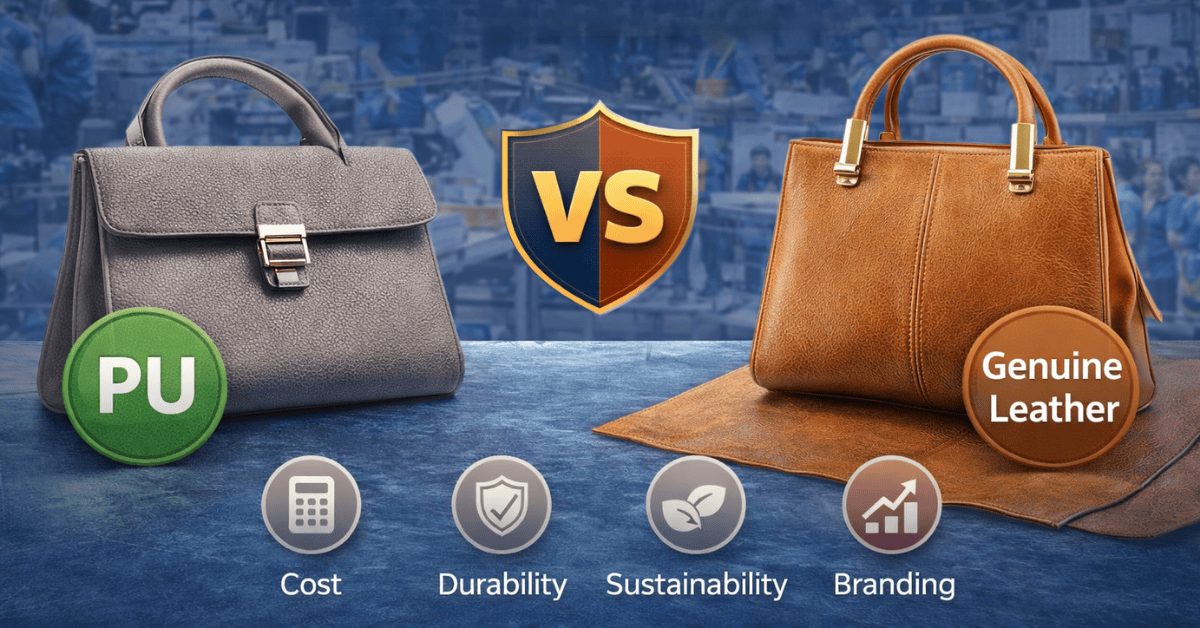
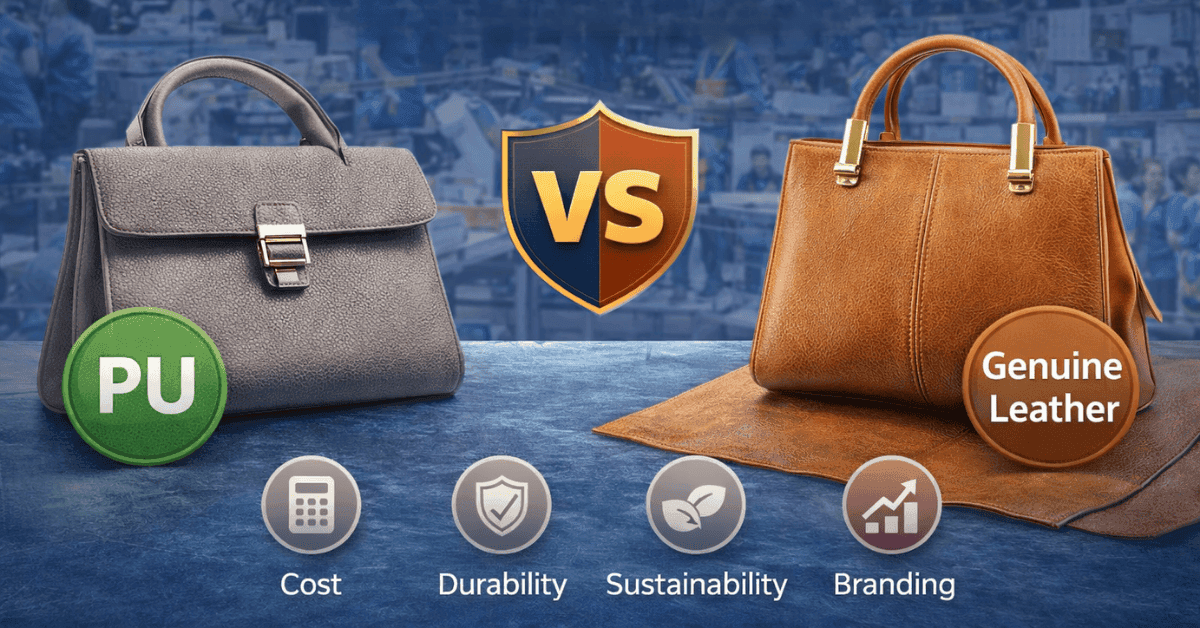
PU vs genuine leather — which material is better for your brand?
The choice affects:
-
Manufacturing cost
-
Brand positioning
-
Target customer perception
-
Sustainability claims
-
Product durability
-
Profit margins
According to global market research data, the global leather goods market is projected to exceed $750 billion by 2030, while synthetic and vegan leather segments are growing at over 6–8% CAGR annually, driven by sustainability trends and affordability.
In this guide, we compare PU leather and genuine leather handbags from a professional OEM manufacturing perspective.
What Is PU Leather?
PU leather (polyurethane leather) is a synthetic material made by coating a fabric base (usually polyester or cotton) with a polyurethane layer to simulate real leather texture.
Key Characteristics:
-
Lower cost
-
Uniform surface texture
-
Lightweight
-
Wide color availability
-
Easy mass production
PU leather has significantly improved over the past decade. Modern microfiber PU can visually resemble genuine leather at a fraction of the cost.
What Is Genuine Leather?
Genuine leather is made from animal hides (typically cowhide), processed through tanning methods such as chrome tanning or vegetable tanning.
Types of Genuine Leather:
-
Full-grain leather
-
Top-grain leather
-
Corrected-grain leather
-
Split leather
Full-grain leather is considered the highest quality due to durability and natural grain preservation.
According to industry standards, high-quality full-grain leather bags can last 5–15 years, depending on usage and care.
PU vs Genuine Leather: Cost Comparison (2026)
From an OEM factory pricing perspective:
| Material Type | Average EXW Manufacturing Cost |
|---|---|
| Basic PU Bag | $6 – $12 |
| Premium Microfiber PU | $10 – $18 |
| Genuine Leather | $18 – $40+ |
| Premium Full-Grain Leather | $40 – $80+ |
Switching from PU to genuine leather can increase unit cost by 30%–70% or more, depending on leather grade.
Durability & Lifespan Comparison
Genuine Leather
✔ Breathable
✔ Develops patina over time
✔ Long-term durability
✔ Higher resistance to tearing
Estimated lifespan: 5–15 years
PU Leather
✔ Water-resistant surface
✔ Lightweight
✖ May crack after 2–5 years
✖ Less breathable
Estimated lifespan: 2–5 years
For mid-market fashion brands, PU may be acceptable. For luxury positioning, genuine leather often performs better long-term.
Brand Positioning Impact
Material choice directly affects brand perception.
PU Leather Positioning
-
Affordable fashion
-
Trend-driven seasonal collections
-
Vegan-friendly marketing
-
Fast-fashion retail
Genuine Leather Positioning
-
Premium branding
-
Luxury perception
-
Heritage storytelling
-
Long-term value product lines
According to consumer surveys, over 60% of premium handbag buyers associate genuine leather with higher quality and brand credibility.
Sustainability Considerations (Important in 2026)
Sustainability has become a major purchasing driver.
PU Leather Sustainability
Traditional PU is petroleum-based and not biodegradable. However:
-
Water-based PU
-
Recycled PU
-
Bio-based alternatives
are increasingly used to reduce environmental impact.
Genuine Leather Sustainability
Leather is biodegradable but involves:
-
Animal agriculture impact
-
Chemical tanning concerns
-
Water usage
According to environmental lifecycle studies, chrome tanning remains the dominant method globally, but vegetable tanning is growing in demand for eco-conscious brands.
Your sustainability claim must match your target market expectations.
Production & Manufacturing Differences
PU Production Advantages
-
Stable supply chain
-
Faster sampling
-
Lower MOQ
-
Consistent color batches
Genuine Leather Production Challenges
-
Natural hide variation
-
Higher material wastage
-
Color batch inconsistency
-
Longer material sourcing cycle
Factories with large capacity (500+ employees, 80,000+ monthly units) can manage leather waste more efficiently than small workshops.
MOQ & Pricing Flexibility
PU handbags usually allow:
-
Lower MOQ (200–300 pieces)
-
Lower mold investment
-
Faster lead time
Genuine leather projects often require:
-
Higher MOQ (300–500 pieces minimum)
-
Higher working capital
-
Longer development cycle
For startup brands, PU may reduce financial risk.
Profit Margin Comparison
Example retail pricing:
PU bag production cost: $12
Retail price: $69
Gross margin: High
Genuine leather production cost: $28
Retail price: $159
Margin percentage similar, but higher absolute profit per unit.
Luxury brands often prefer leather due to higher perceived value.
When Should You Choose PU?
Choose PU if:
-
You target trend-based fashion
-
You need lower MOQ
-
You want faster product turnover
-
You focus on vegan positioning
-
You want entry-level pricing
When Should You Choose Genuine Leather?
Choose genuine leather if:
-
You aim for premium positioning
-
You want long-term durability
-
You focus on craftsmanship branding
-
You target mid-to-high income consumers
-
You want stronger luxury perception
Hybrid Strategy: Smart Brands Use Both
Many successful brands combine:
-
PU for entry collections
-
Genuine leather for premium lines
This allows:
-
Broader customer coverage
-
Higher overall revenue
-
Flexible pricing tiers
Final Thoughts
There is no universal “best” material.
The best material depends on:
-
Target market
-
Brand positioning
-
Price strategy
-
Sustainability claim
-
Production volume
-
Long-term brand vision
If you are developing a private label handbag collection, consult an experienced OEM bag manufacturer to analyze cost, durability, MOQ, and positioning before finalizing material choice.
Choosing the right material is not just a production decision — it is a brand strategy decision.