

Introduction
Starting a handbag brand in 2026 is more accessible than ever — but competition is also stronger than ever.
According to global market research reports, the global handbag market is projected to exceed USD 90 billion within the next few years, driven by:
-
Growth of direct-to-consumer (DTC) brands
-
Social commerce and influencer marketing
-
Rising demand for sustainable fashion
-
Expansion of private label manufacturing
At the same time, customers expect:
-
Premium quality
-
Transparent production
-
Sustainable materials
-
Strong brand identity
If you’re asking:
-
How do I start a handbag brand from scratch?
-
How does private label handbag manufacturing work?
-
How much investment is required?
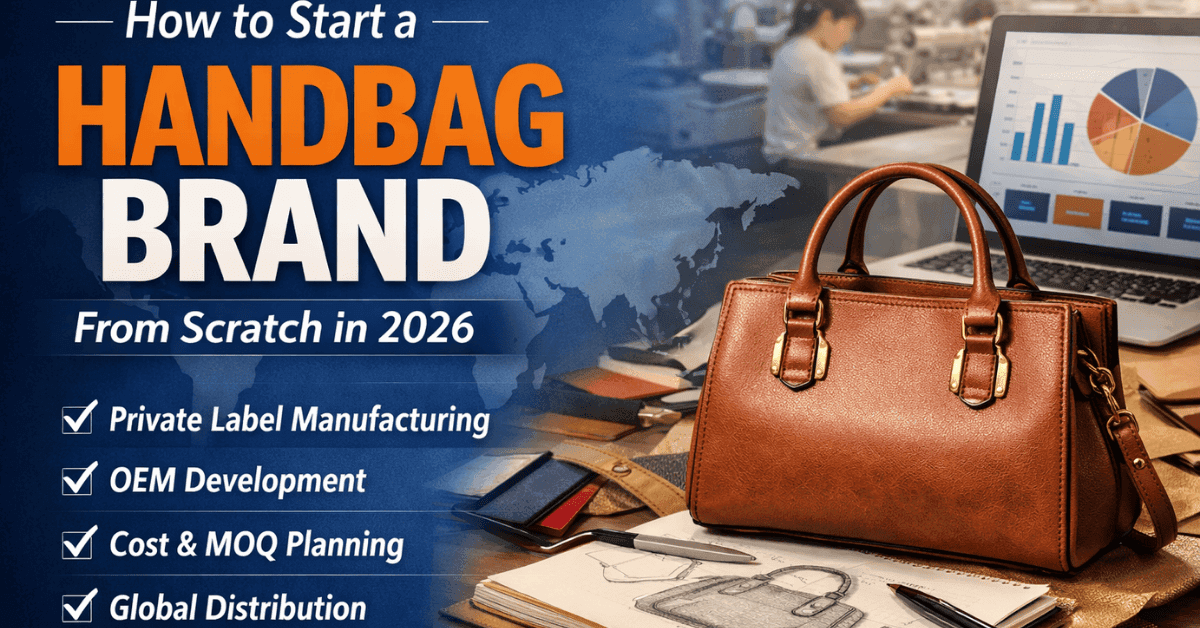
This step-by-step guide explains everything from brand positioning to OEM production and global distribution.
Step 1: Define Your Brand Positioning
Before contacting an OEM handbag manufacturer, clarify:
-
Who is your target customer?
-
What is your price range?
-
What materials will you use? (PU, genuine leather, vegan leather)
-
What is your brand story?
-
What makes your brand different?
Market Segmentation Example
| Market Level | Retail Price | Material Strategy |
|---|---|---|
| Entry Level | $39–$79 | PU / Vegan |
| Mid-Market | $89–$199 | Premium PU / Mixed |
| Premium | $200–$500+ | Genuine Leather |
Your positioning determines your manufacturing strategy.
Step 2: Conduct Market Research
Study:
-
Competitor pricing
-
Bestseller styles
-
Customer reviews
-
Sustainability claims
-
Influencer trends
Data shows that more than 60% of consumers read reviews before purchasing fashion products, and durability is one of the most important factors in handbag purchases.
Understanding market gaps reduces product failure risk.
Step 3: Choose OEM, ODM, or Private Label Manufacturing
OEM (Original Equipment Manufacturing)
-
You provide the design
-
Factory produces according to your specifications
-
Full customization
ODM (Original Design Manufacturing)
-
Factory provides base design
-
You customize logo and details
-
Faster development
Private Label
-
Your brand applied to existing styles
-
Lower risk
-
Lower development cost
For first-time entrepreneurs, private label or light OEM customization is often the safest approach.
Step 4: Develop Your Product Concept
Prepare:
-
Sketches or reference images
-
Size and structure details
-
Material preference
-
Hardware specifications
-
Target cost
-
Packaging requirements
A professional tech pack improves communication and reduces sampling errors.
Step 5: Understand MOQ and Manufacturing Cost
Cost planning is critical.
Average Manufacturing Cost (EXW)
-
PU handbags: $6–$15
-
Genuine leather: $18–$40+
-
Premium leather: $40–$80+
Typical MOQ
-
PU: 200–300 pieces
-
Leather: 300–500 pieces
Factories with large production capacity (500+ employees, 80,000+ monthly output) often provide better pricing stability and shorter lead times.
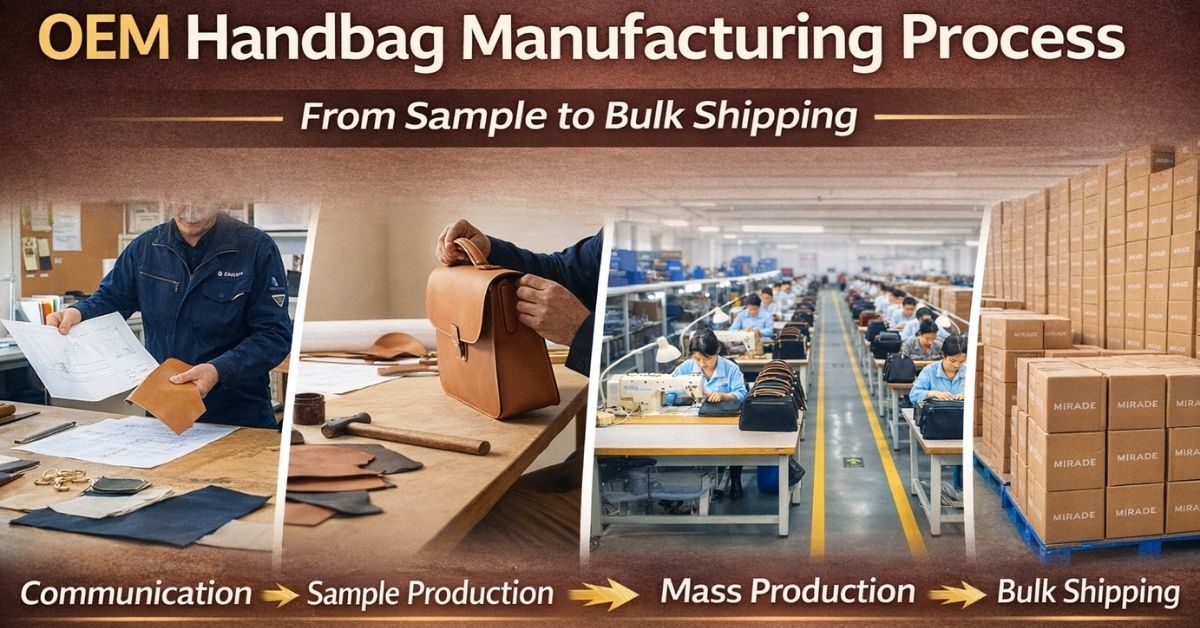
Step 6: Sampling Process
Sampling includes:
-
Pattern making
-
Material sourcing
-
Prototype construction
-
Structure testing
-
Revision
Sample cost typically ranges:
$50–$200 per style
Sampling ensures your handbag matches brand expectations before mass production.
Step 7: Branding & Packaging Strategy
Branding increases perceived value.
Consider:
-
Embossed logo
-
Custom metal hardware
-
Dust bags
-
Branded boxes
-
Sustainable packaging
Strong packaging can increase retail value significantly.
Step 8: Production & Quality Control
After sample approval:
-
Bulk material procurement
-
Production line scheduling
-
In-process inspection
-
Final quality control
Professional factories use AQL inspection standards and material testing procedures to reduce defects.
Certifications such as BSCI and ISO enhance international credibility.
Step 9: Logistics & Import Planning
Shipping options:
-
Sea freight (cost-effective)
-
Air freight (faster but costly)
Import duties vary by country.
Shipping and customs can add 10–30% to landed cost.
Always calculate full landed cost before setting retail pricing.
Step 10: Sales Channels in 2026
Successful handbag brands often sell through:
-
Shopify websites
-
Amazon
-
Social commerce (Instagram, TikTok)
-
Influencer collaborations
-
Retail partnerships
Direct-to-consumer models allow higher profit margins.
Step 11: Budget Planning Example
Example startup scenario:
Initial order: 300 pieces
Production cost: $13 per unit
Manufacturing total: $3,900
Packaging & freight: $1,200
Marketing: $2,000
Estimated startup budget: $7,000–$10,000+
Proper cash flow planning reduces risk.
Step 12: Sustainability Strategy
Consumers increasingly demand sustainable fashion.
Options include:
-
Recycled PU
-
Vegan leather
-
Water-based adhesives
-
FSC-certified packaging
Sustainability enhances brand trust.
Step 13: Build Long-Term Brand Value
Long-term success requires:
-
Consistent quality
-
Signature design elements
-
Seasonal collections
-
Customer loyalty strategy
-
Strong storytelling
A handbag brand is not just a product — it is a positioning strategy.
Common Mistakes to Avoid
❌ Choosing a supplier only based on lowest price
❌ Ignoring sampling revisions
❌ Overestimating demand
❌ Weak branding
❌ Poor quality control
Final Thoughts
Starting a handbag brand from scratch in 2026 is achievable with:
-
Clear positioning
-
Reliable OEM handbag manufacturer
-
Cost control strategy
-
Smart marketing execution
Private label handbag manufacturing lowers entry barriers, but strategic planning determines long-term success.
Choosing the right manufacturing partner ensures:
-
Stable quality
-
Transparent pricing
-
Scalable production
-
Global compliance
Your success depends not only on design — but on smart supply chain decisions.
Frequently Asked Questions
How much does it cost to start a handbag brand?
Startup investment typically ranges from $7,000–$15,000 depending on MOQ, material choice, and marketing budget.
What is the MOQ for private label handbag manufacturing?
MOQ usually starts at 200–300 pieces for PU bags and 300–500 pieces for genuine leather.
Should I choose OEM or private label manufacturing?
Private label is easier for beginners, while OEM offers full customization and long-term brand flexibility.
How long does handbag production take?
Sampling takes 7–15 days, and bulk production typically takes 25–45 days depending on complexity.
Is China still good for handbag manufacturing?
Yes. China offers a mature supply chain, skilled labor, and competitive OEM pricing.