
Fly Knit Tote Bag Overview
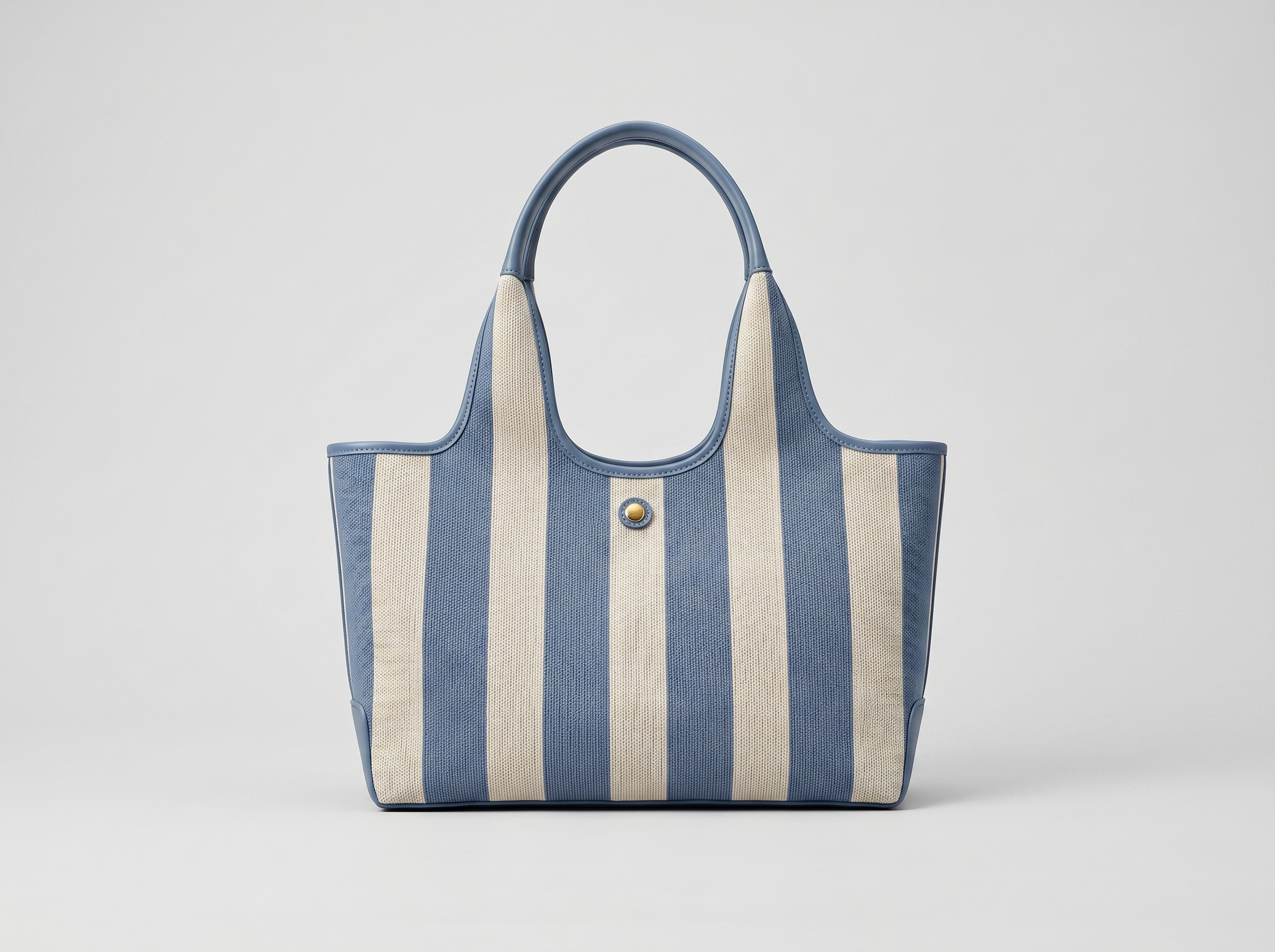
The fly knit tote bag is a practical everyday carry solution for buyers who want a lightweight, visually distinct bag for commuting, shopping, and casual use. From the visible design, this tote solves a common problem for retail and private label buyers: how to offer a simple shoulder bag that looks more elevated than a basic shopping tote, while still keeping the structure easy to carry and suitable for daily essentials such as a phone, wallet, cosmetics, notebook, or small accessories.
This style combines an open-top tote format with a clean striped textile body and rounded carry handles. The result is a bag that feels versatile enough for errands and weekend outings, yet polished enough for lifestyle retail collections. For brands building a private label tote bag line, the silhouette is also easy to position across fashion, travel, and casual lifestyle channels.
Product Structure and Visible Features
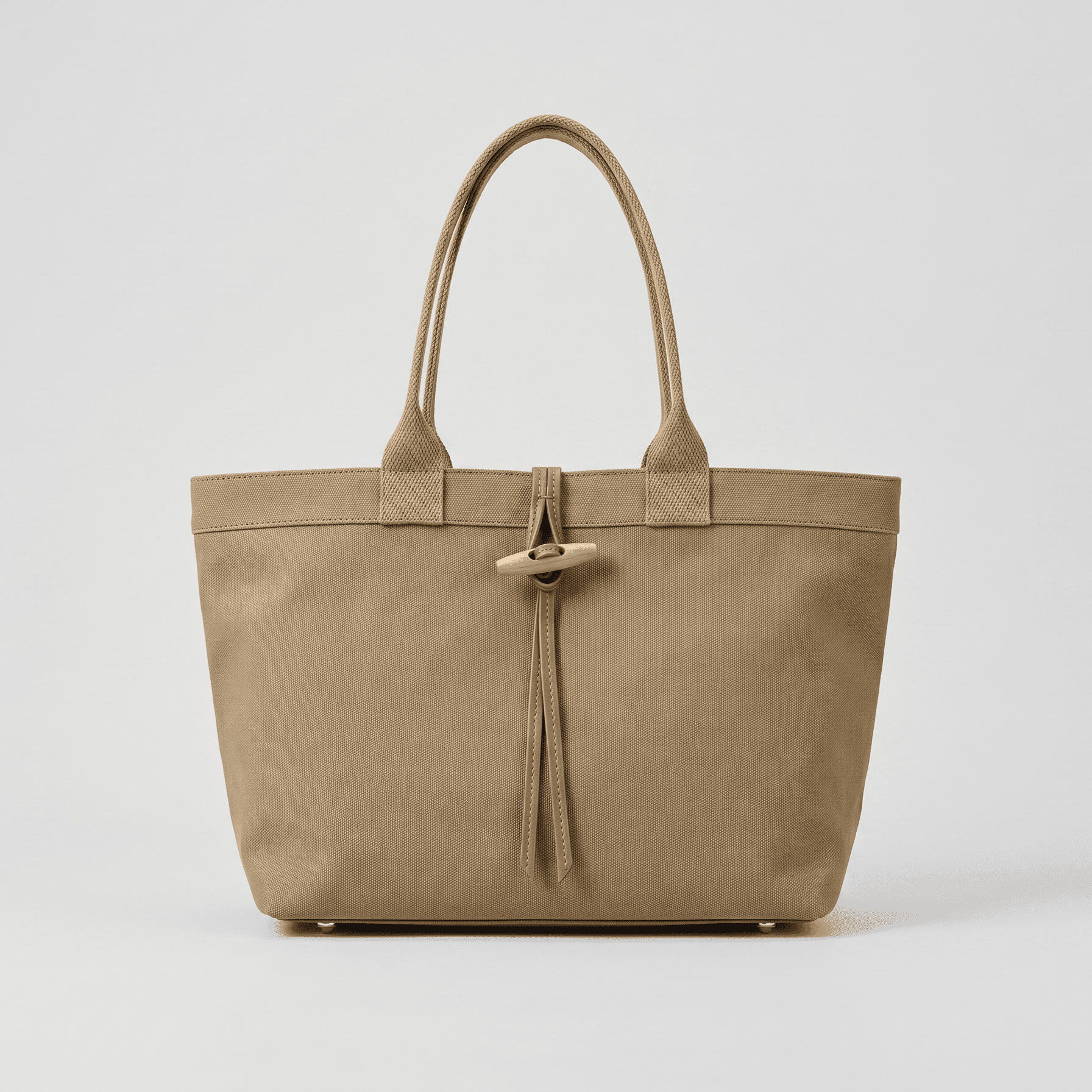
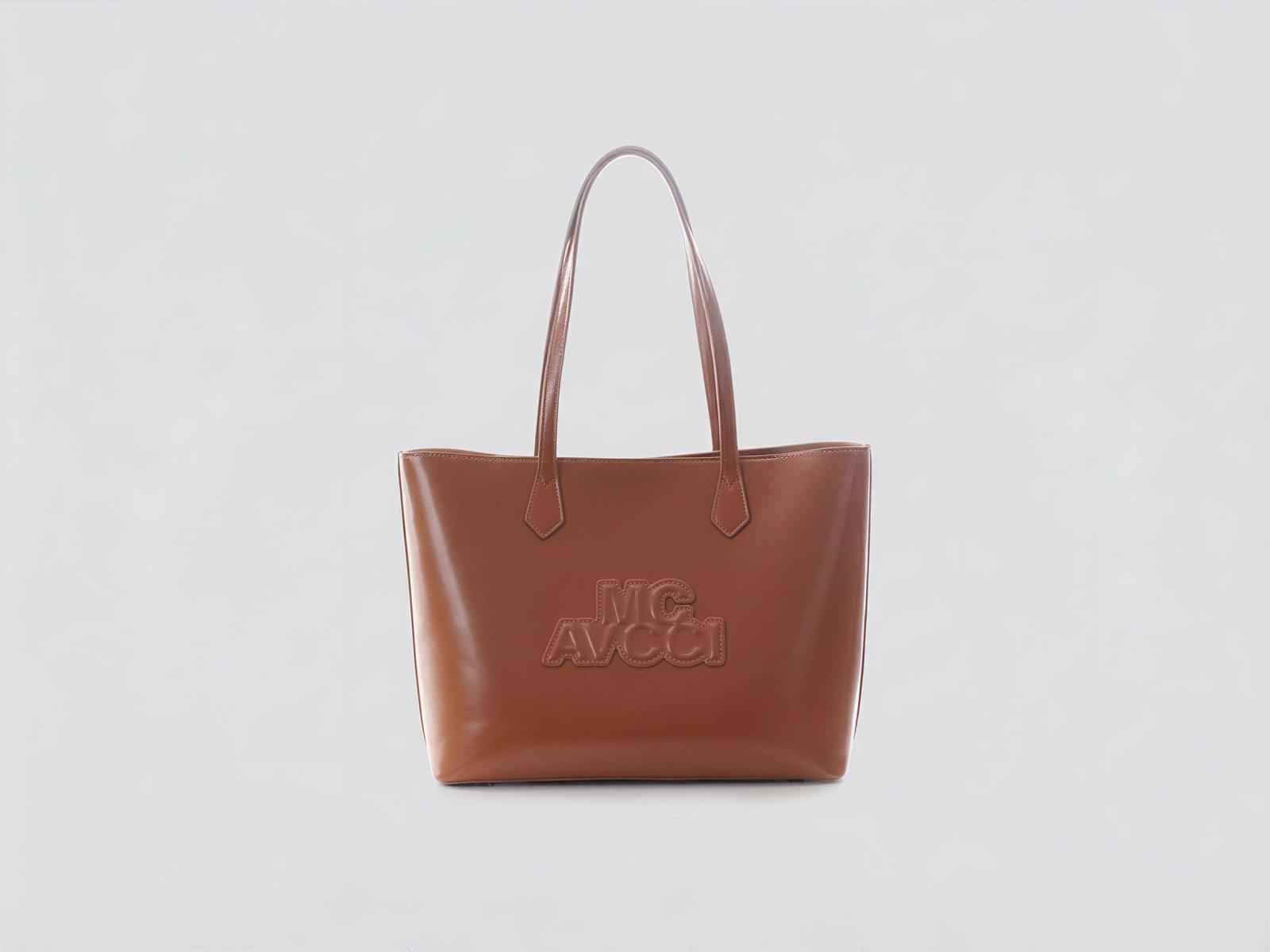
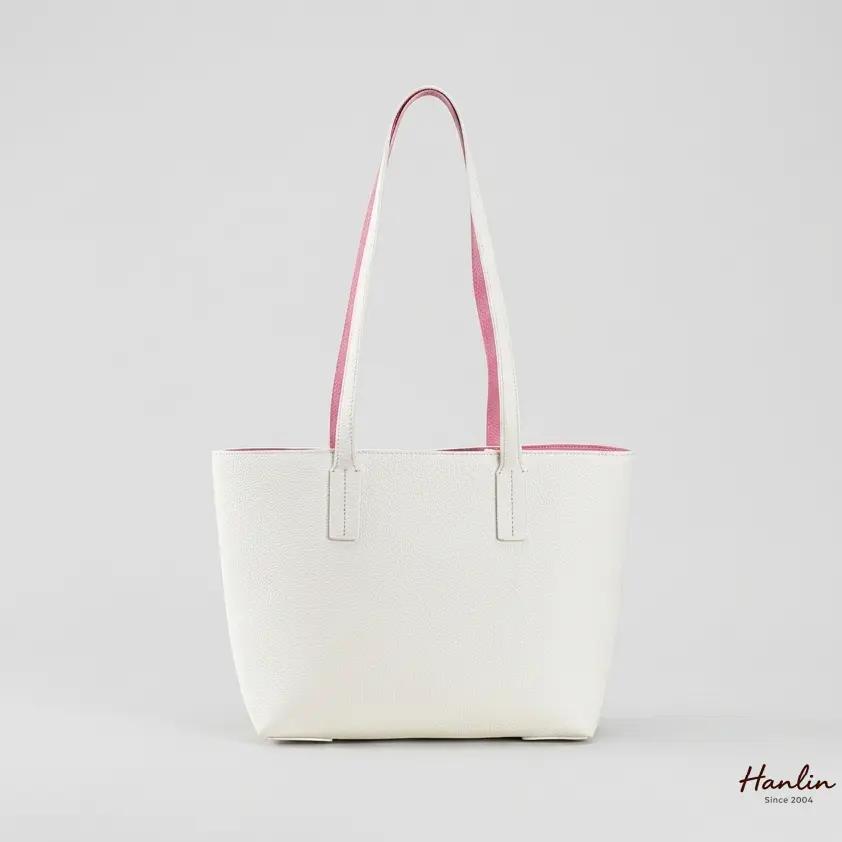
Based on the provided image details, the bag has a medium-sized trapezoid or rectangular body with slightly flared sides and a reinforced base. That shape helps the bag stand upright more reliably than a soft pouch-style bag, which is useful for shelf presentation and daily packing. The exterior shows alternating blue and cream vertical stripes, giving the bag a knit or woven appearance. Exact fiber content is not confirmed, so it should be described carefully as a textile body with a fly knit bag look rather than a fully verified knit construction.
Key visible elements
Two integrated rounded handles support hand carry or shoulder carry.
A single front snap/button-style closure detail is visible near the top center.
The body appears minimally finished, with no exterior pockets shown.
Edge binding and stitched trim create a neat outline around the structure.
These details matter to buyers comparing options from a tote bag factory or tote bag supplier, because visible construction often signals the level of finish customers will experience in store.
Materials and Finish Options
The body appears to use a blue and off-white striped textile, likely synthetic or blended, though the exact material cannot be confirmed from the image. The handles and trim look smooth and coated, or possibly faux leather, which creates contrast against the soft textile surface. That mixed-material look is often used in custom tote bag programs because it adds definition without making the product too formal.
For private label tote bag development, brands can usually discuss different material directions depending on the intended price point and end use. Common finishing paths may include knit-inspired textiles, woven fabrics, coated trims, faux leather accents, matte or glossy hardware, and different binding colors. If you are planning wholesale private label tote bags, selecting the right material combination is often more important than adding complex features.
Manufacturing Approach
From the visible construction, this style likely involves textile panel cutting, body assembly, edge binding, handle attachment, and hardware installation for the front closure detail. A tote bag supplier working on this type of product would typically focus on consistent stripe alignment, clean seam finishing, and stable handle reinforcement. These are the practical points that affect the bag’s appearance and usability more than decorative extras.
Because the exact process is not fully known, it is safer to view the fly knit tote bag as a textile-based structured tote rather than a performance bag with verified technical claims. That makes it suitable for fashion-led and everyday carry programs where appearance, portability, and basic organization are the main purchasing priorities.
Application Scenarios
This tote fits several retail use cases. It can serve as a casual daily bag for commuting, a shopping tote for short purchases, a weekend carry bag for light travel, or a beach-style accessory depending on how it is styled and marketed. The medium format is especially useful for customers who want something larger than a handbag but lighter and more relaxed than luggage.
For brands, the same base silhouette can be developed into different collections: a knit tote bag for seasonal fashion lines, a private label canvas tote bag alternative for lifestyle programs, or a custom tote bag concept for promotional and retail partnerships.
Quality Control and Buyer Considerations
When evaluating this product, buyers should ask for clear confirmation of material composition, lining, closure type, handle reinforcement, and final dimensions. Since those details are not visible, they should be specified in the development stage before mass production. Stripe alignment, stitch consistency, base stability, and handle attachment strength are also important checkpoints.
For sourcing teams, the most useful buying factors are usually appearance consistency, ease of production, cost control, and whether the bag can be adapted into a private label tote bag program with brand-specific colors or trim. If you need a supplier for a seasonal launch, it is worth confirming sample structure early so the finished product matches the intended market position.
Customization Guidance
Potential customization options may include color changes, stripe layout adjustments, handle material selection, closure revisions, logo placement, and packaging design. Depending on your target market, you can also request different silhouette heights, base width changes, or trim updates to create a more fashion-forward or more utility-focused product.
Contact for Development
If you are sourcing a fly knit tote bag for retail, private label, or promotional use, share your target size, preferred material direction, and branding needs with your tote bag factory or tote bag supplier. That information will help turn the visible concept into a production-ready custom tote bag that matches your market requirements.