
Introduction
For global buyers and private label brands, choosing the right OEM handbag manufacturer is not just about price — it’s about process reliability.
From initial communication to final delivery, a professional factory must ensure:
- Accurate sampling
- Stable mass production
- Strict quality control
- Reliable global shipping
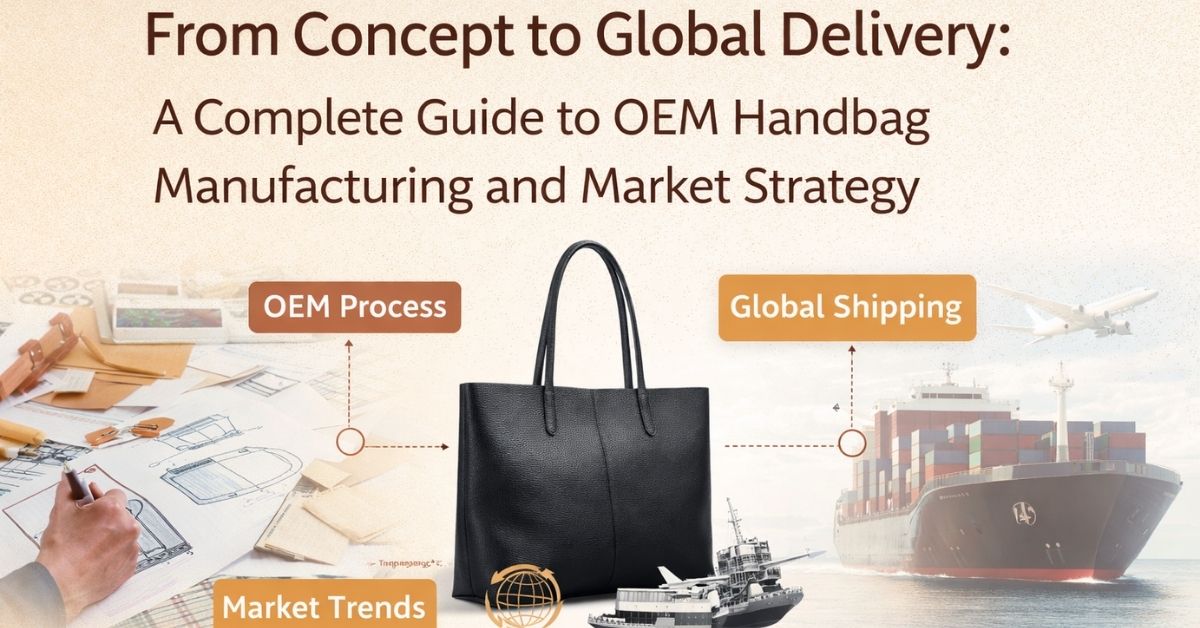
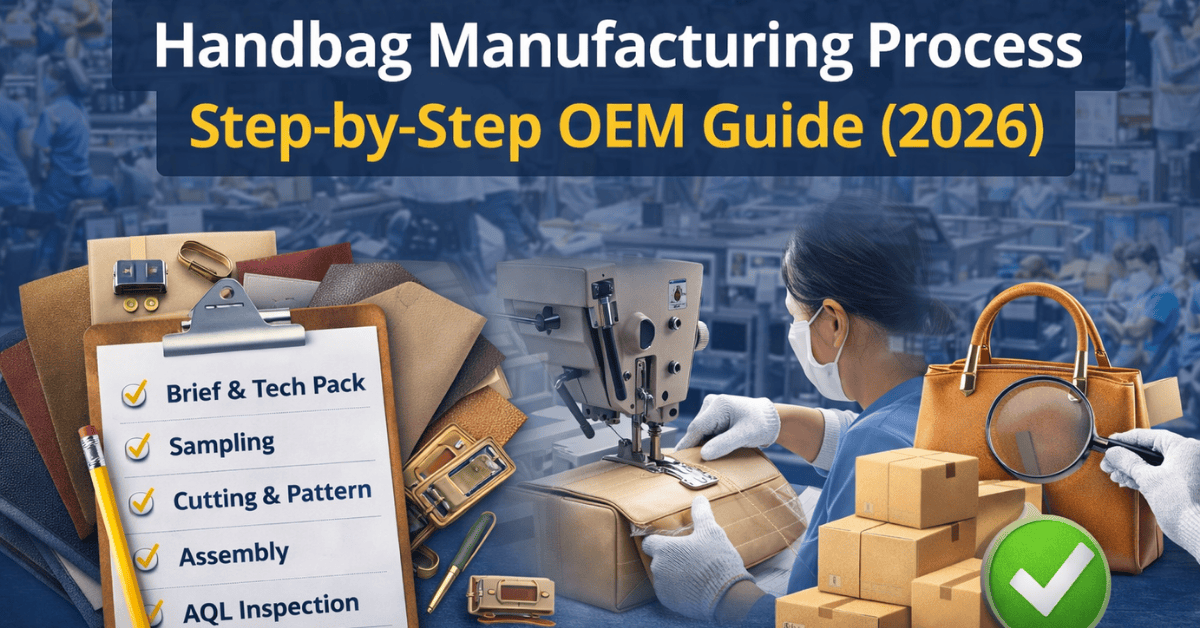
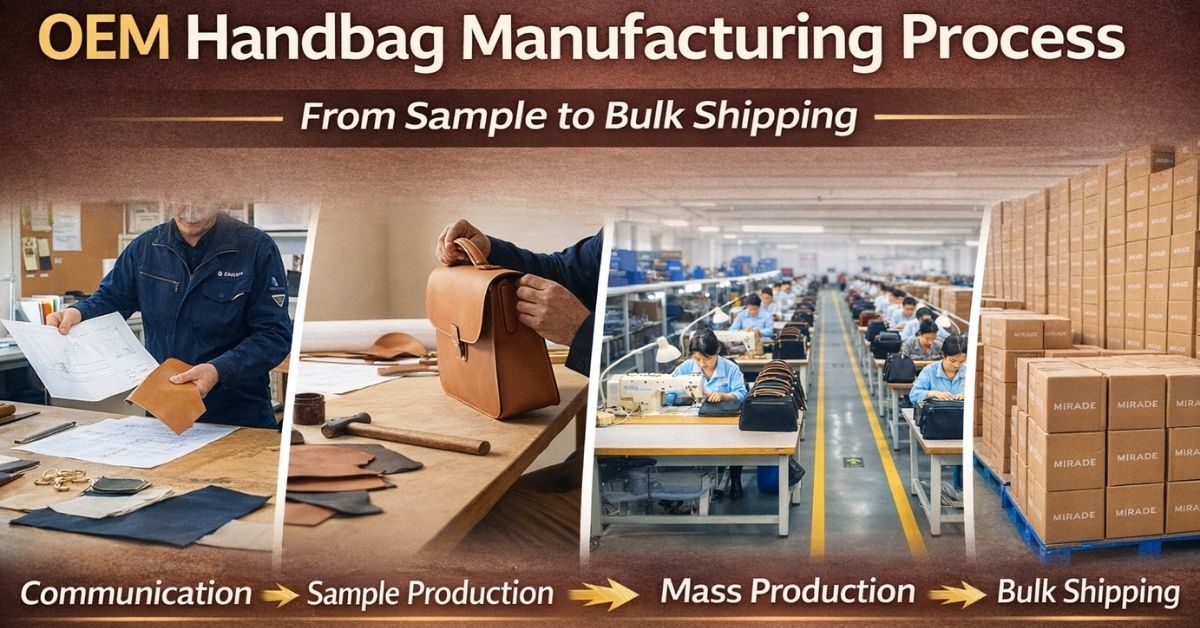
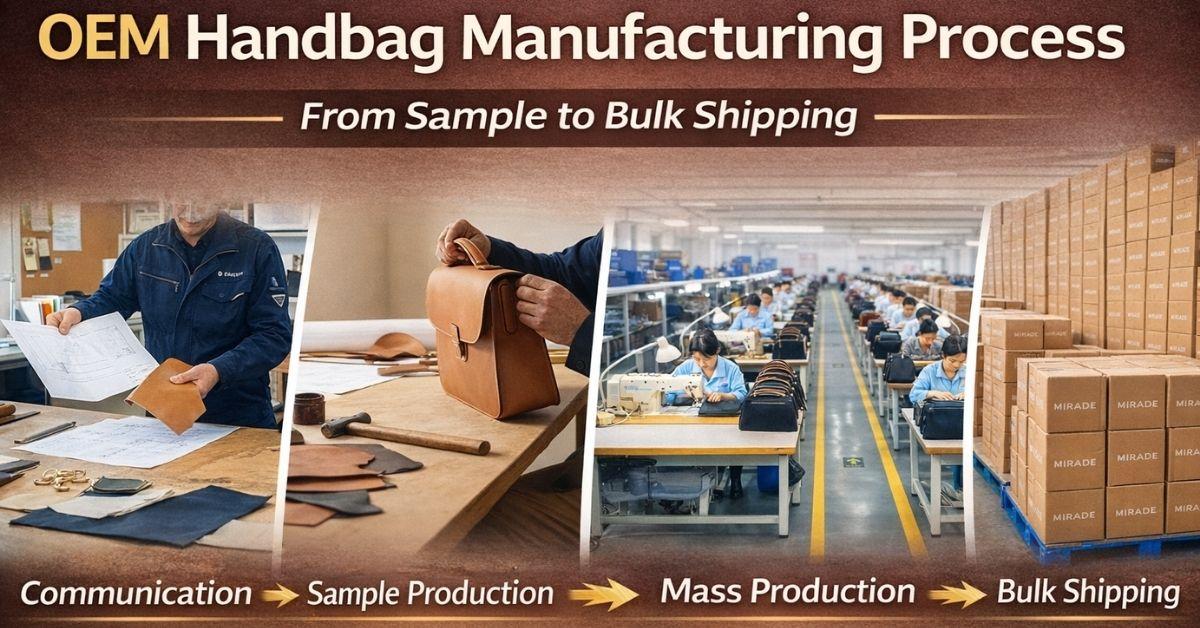
In this guide, we walk through the complete OEM handbag manufacturing process, from concept to bulk shipment.
Communication: Turning Ideas into Production Plans
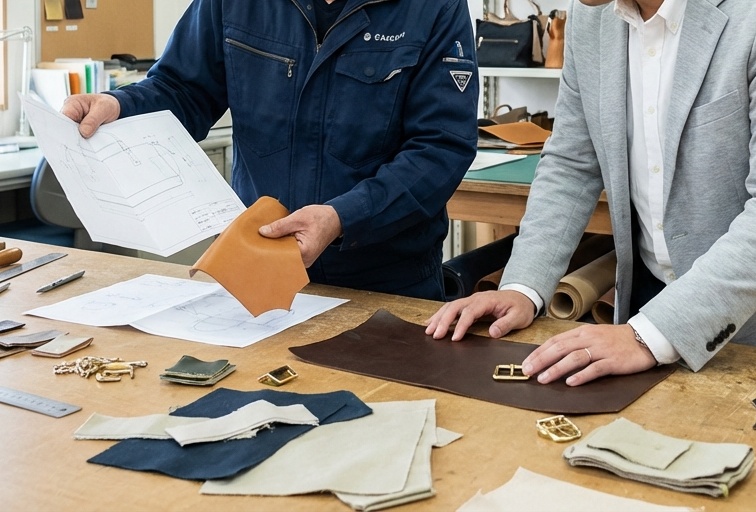
Every successful handbag project begins with clear communication.
At this stage, buyers work closely with the factory to define:
- Material selection (PU, genuine leather, vegan leather)
- Product structure and size
- Hardware details (zippers, logos, accessories)
- Branding requirements (custom logo handbags, private label)
Professional OEM factories provide one-on-one consultation to reduce development risks.
This stage directly impacts handbag manufacturing cost, MOQ, and production timeline.
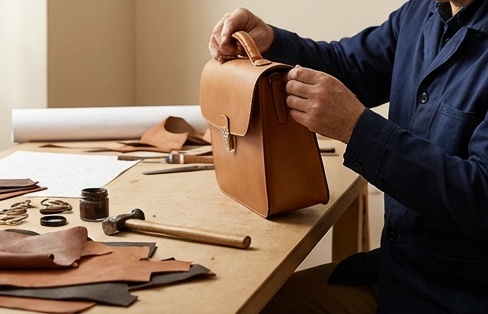
Sample Production: From Design to Reality
Once specifications are confirmed, the factory creates a physical sample.
Sampling includes:
- Pattern making
- Material sourcing
- Manual assembly
- Structure optimization
Typical sample cost ranges from $50–$200 per style, depending on complexity.
For B2B buyers, sample approval is critical because:
✔ It defines final quality standards
✔ It minimizes bulk production defects
✔ It ensures brand consistency
Factories with strong sampling capabilities can significantly shorten time-to-market.
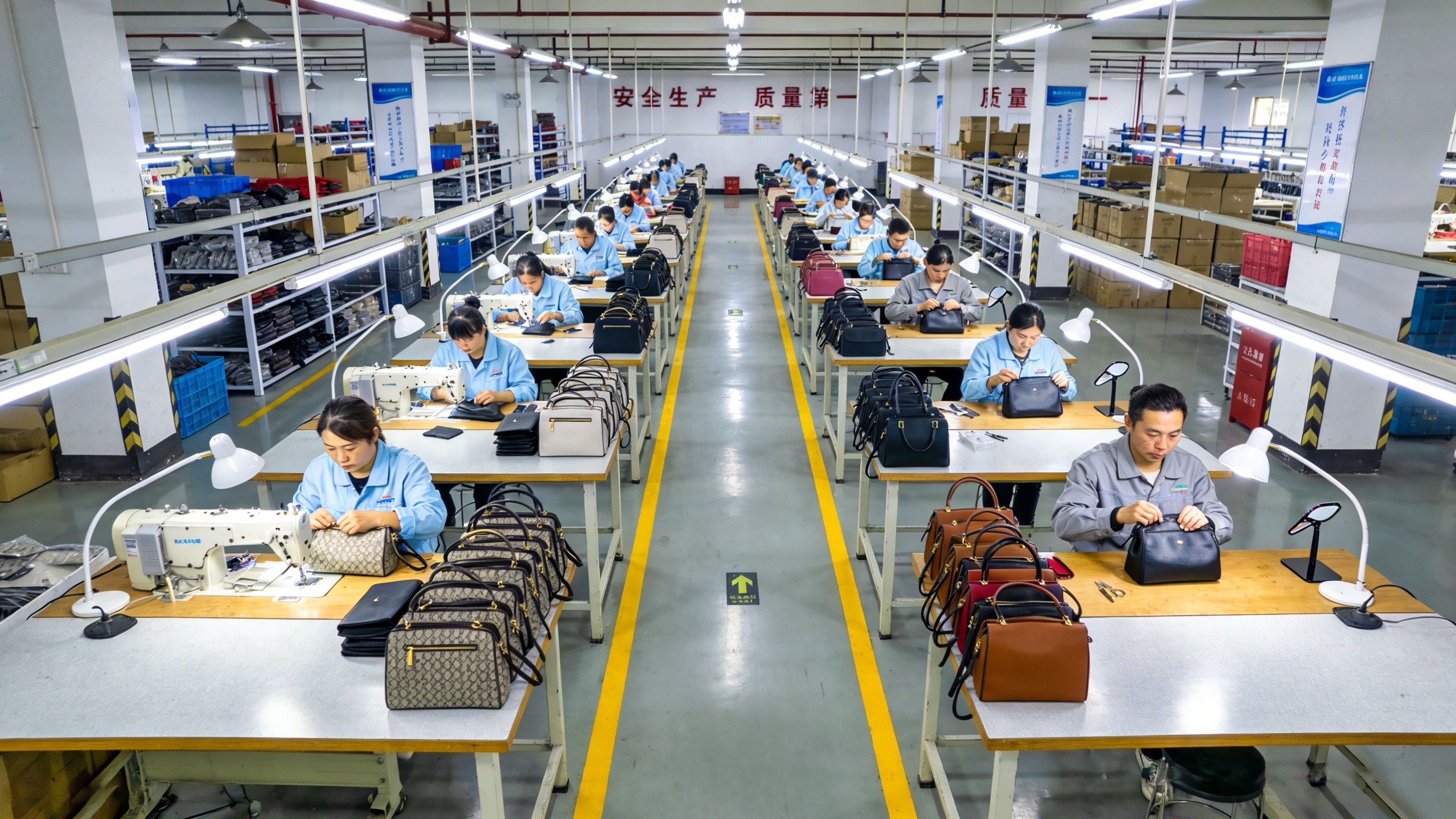
Mass Production: Stable Output with Quality Control
After sample approval, bulk production begins.
Professional handbag factories implement:
- In-line QC (quality control during production)
- AQL inspection standards
- Material consistency checks
- Skilled worker allocation
Factories with 500+ employees and 80,000+ monthly capacity can ensure:
- Stable output
- Consistent quality
- Faster delivery cycles
This is where experienced OEM bag manufacturers outperform small workshops.
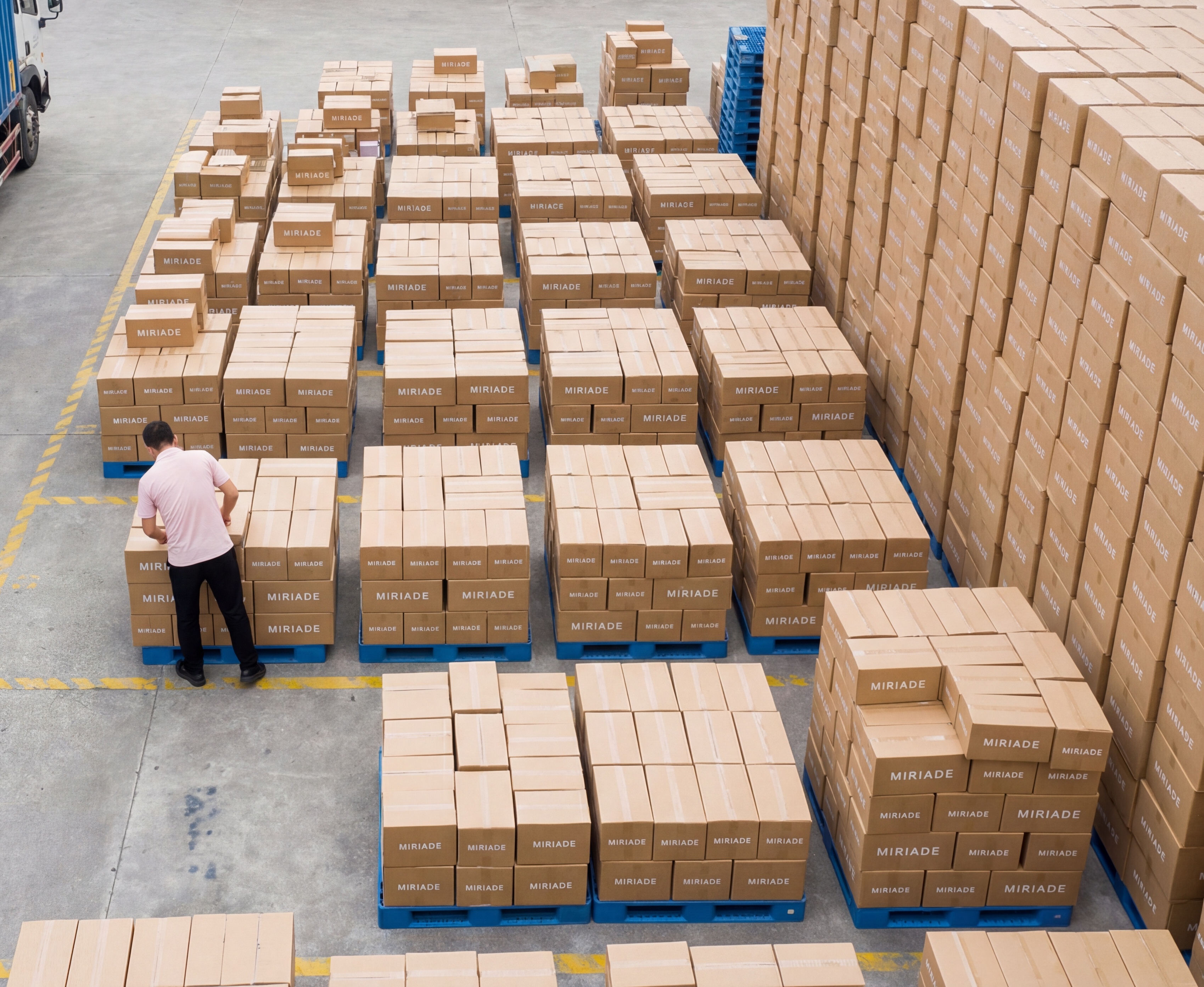
Delivery: Global Shipping & Export Coordination
Once production is complete, the focus shifts to logistics.
Factories support:
- Export packaging
- Carton labeling
- Documentation (invoice, packing list, B/L)
- Freight coordination
Shipping options include:
- Sea freight (most cost-effective)
- Air freight (fast delivery)
- DDP shipping (door-to-door solution)
For bulk handbag orders, sea freight remains the preferred option.
Why This Process Matters for B2B Buyers
For importers and private label brands, a structured process ensures:
- Lower defect rates
- Predictable lead times
- Cost control
- Supply chain stability
According to industry data, over 80% of global buyers prefer manufacturers with full OEM/ODM capabilities, rather than simple production-only factories.
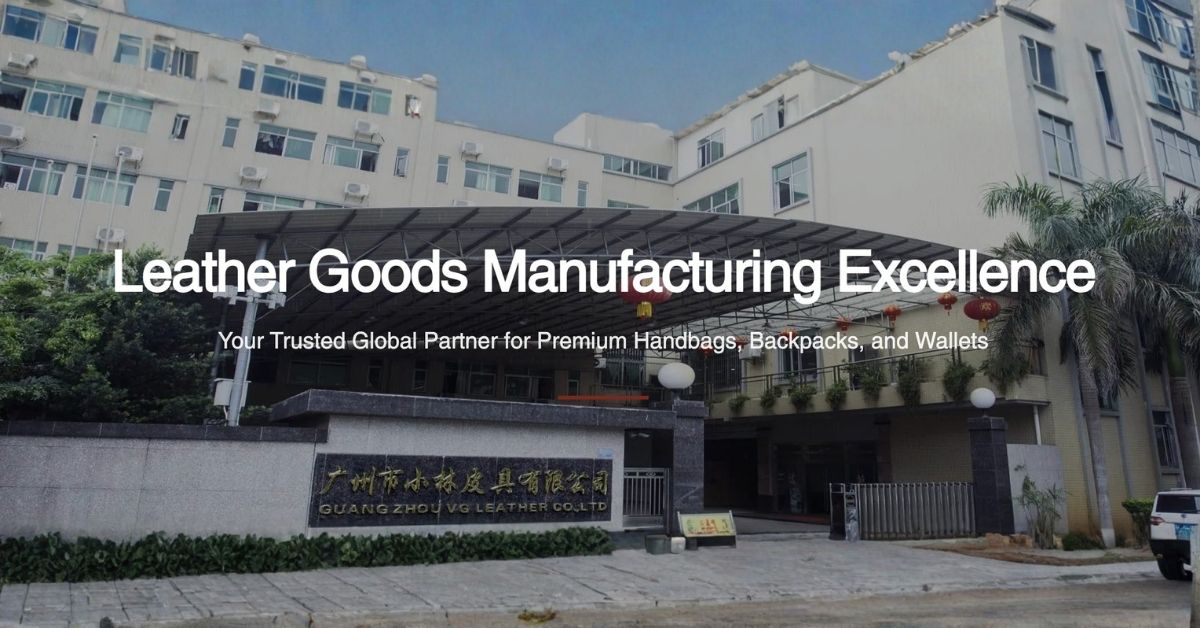
Final Thoughts
The success of a handbag business depends heavily on choosing the right manufacturing partner.
A professional OEM handbag manufacturer provides:
- Clear communication
- Accurate sample development
- Scalable mass production
- Reliable global shipping
This end-to-end capability is what separates high-performing suppliers from unreliable ones.
If you are planning to develop custom handbags or launch a private label brand, working with an experienced factory ensures long-term success.